

Abstract
In this article, we introduce and empirically illustrate a practice-theoretical framework for understanding the relevance of knowledge. We argue that the notion of relevance - while proliferating in the science-policy debates and knowledge management discourses - has remained strikingly under-theorised and not sufficiently sensitive to the diversities of knowledge-producing and -adopting contexts. To alleviate this, we develop an account of relevance that draws on the practice-theoretical approach in social theory and its view of knowledge as essentially embedded in social practices. We propose that the relevance of knowledge relies on making connections between the incoming knowledge and the heterogeneous configuration of elements constituting the knowledge-receiving practice, including pre-existing knowledge, meanings, aspirations, technologies and tools. In our framework, relevance is not an intrinsic or universal characteristic of knowledge but a relational, multidimensional and dynamic outcome of how knowledge becomes externalised and how it aligns with the organisation of a given practice. In the second part of the article, we employ this framework to account for the patterns of adoption of knowledge produced in the so-called User Experience research. We conclude by suggesting that the proposed practice-theoretical understanding may inspire more finely-grained strategies for achieving the relevance of knowledge.
Introduction
In recent decades, it has become common to believe that the modes of knowledge production have been changing into more application-oriented ones, which has led to the proliferation of notions such as ‘usefulness’, ‘impact’ and ‘relevance’ of knowledge (Nowotny et al. 2001; Boswell and Smith 2017; Brunet et al. 2024). The premise of these transformations has been that the value of knowledge comes not only from its epistemic quality (‘excellence’) but also from being useful, practice-oriented and relatable for its recipients (‘relevance’). In line with this assumption, decision-makers, practitioners, and broader audiences have become increasingly expecting knowledge producers to deliver knowledge that is ‘both scientifically robust and socially relevant’ (Spaapen and Van Drooge 2011: 212), while many scholars have criticised the persistent ‘rigour-relevance gap’ and ‘research-practice divide’ (Bartunek and Rynes 2014; Paine and Delmhorst 2020). More recently, societal and environmental challenges have made the quest for practice-relevant knowledge even more urgent, though not necessarily easier (Hermansen et al. 2021; Sundqvist and Linke 2024).
This pursuit of relevance has, however, also aroused sceptical voices. Many scholars have seen varied consequences of stepping outside the realm of epistemic credibility and scientific rigour into the normative and politicised sphere of relevance (Jasanoff 2010; Lentsch and Weingart 2011). Essentially, many also pointed out that the very notion of relevance is under-theorised, unspecified and problematic. It was noted that ‘the definition of relevance is ambiguous, its measurement imprecise, and its meaning complex’ (Augier and March 2007: 138) and ‘various authors speak very generally and abstractly about relevance as if there were a general consensus on how the term is understood, which is not the case’ (Nicolai and Seidl 2010: 1257-8). Indeed, across the extensive advisory literature for scientists, experts and knowledge producers (Cairney and Kwiatkowski 2017; Marshall et al. 2017; Oliver and Cairney 2019; Šucha and Sienkiewicz 2020; Whitty 2015), relevance seems to be treated as a self-evident concept and a kind of umbrella term for a set of qualities that make knowledge relatable and useful. Analytically, however, it ‘remains underdeveloped’ (Brunet et al. 2024: 2) and ‘something of an empty placeholder that heralds an ideal solution to general, anonymous, and pre-existent problems’ (Savransky 2016: 27).
This is problematic for at least two reasons. First, while the popular rhetoric of relevance is theoretically ungrounded, it echoes simplistic and linear conceptualizations of knowledge as an informational and ideational entity that may be extracted from one context and put into another during single one-off events (Sigl and Fochler 2024). This assumption largely misses the fundamental sociological realisation that knowledge is a phenomenon that is produced, shaped, constrained, and embedded in social contexts (Gherardi 2009; Gherardi, Nicolini et al. 2003). Unfortunately, the simplified understanding of relevance remains a conceptual foundation of advisory for knowledge producers and evaluation frameworks that concern many researchers and research institutions. Second, the popular approaches to relevance tend to operate with a vision of two distinct and monolithic worlds of knowledge-making and knowledge-taking that need to be ‘bridged’ (Bartunek and Rynes 2014; Paine and Delmhorst 2020). Such a broad distinction is doubtful. Scientific disciplines are known for their diversity and incommensurability, and it has long been proposed in such concepts as Mode 2 of knowledge production and Triple Helix (Gibbons et al. 1994; Etzkowitz, Leydesdorff 2000; Nowotny et al. 2001) that the knowledge-producing contexts extend beyond the traditional spheres of science into ‘a more heterogeneous and flexible socially distributed system (...) where universities are (...) only one type of player’ (Gibbons et al. 1994: 11). Highly specialized, research-based, codified knowledge may be produced by heterogeneous actors, including government agencies, think tanks, expert networks, grassroots communities, corporate R&D departments, and various multilateral initiatives. Furthermore, research-based knowledge may be utilised in multiple areas and contexts, from decision-, policy- and strategy-making to new product development and organisational transformations. Thus, what is often labelled as ‘research’ and ‘practice’ should rather be viewed as a variety of contexts and domains, yet there is still a lack of ‘fine-grained analytical perspectives for studying the variety of practices related to creating relevance’ (Brunet et al. 2024: 1).
In this paper, we aim to alleviate these theoretical problems by proposing an understanding of relevance that acknowledges the socially situated nature of knowledge and the variety of contexts of knowledge production and use while remaining relatively clear-cut in explaining what makes a given piece of knowledge relevant for particular areas of use. Our efforts are twofold. First, on a theoretical level, we draw on the current wave of social theories of practice, which conceptualise knowledge as not only produced but also appropriated and utilised within social practices. We propose that relevance may be conceptualised as the ease of integrating a given ‘piece’ of knowledge within the specific knowledge-receiving practice. We suggest that this integration happens through making connections between a knowledge-embedding object, which we call an ‘epistemic package’, and meanings, materials, and competencies that constitute the practice to which knowledge travels.
Second, we illustrate this framework empirically by drawing on data from our extensive qualitative study in the user experience (UX) research domain. UX research is an area of social research that produces knowledge about humans’ perceptions, behaviours, and reactions related to making digital products (such as mobile apps, systems and services). Knowledge generated in UX research is meant to be relevant for various kinds of activities and decision-making processes related to developing new digital products - however, in some practices, it becomes widely accepted and routinely put to use, while in others, it is marginalised, which signals uneven relevance. We treat our case as an ‘extreme’ one (Yin 2004; Flyvbjerg 2011) in the sense that it is unusual and hard to explain in terms of dominant conceptualisations of relevance. First, our case is rooted in the commercial area, not in the typical science-policy context, and as such it demonstrates how the question of relevance may be extended to non-scientific areas of knowledge production and adoption. Second, it concerns the situation where knowledge production and adoption occur in institutional proximity and knowledge largely fulfils the conventional requirements for relevance, which could theoretically assure its relevance but fails to do so. It thus creates a puzzle and makes the case ‘particularly well suited for theory development’ (Flyvbjerg 2011: 307).
We believe that our analysis contributes to the discussion on relevance in at least three ways. First, it introduces a sociological framework for understanding relevance, moving beyond the universalist views populating the current discourses and advisory for knowledge producers while remaining finely-grained and sensitive to the diversity and specificity of knowledge-adopting contexts. Second, the proposed practice-theoretical framework is an explanatory one, thus helping to explain what makes knowledge relevant and why seemingly relevant forms of knowledge may still encounter considerable friction in the course of their adoption. As such, it may be inspiring for strategies and interventions aiming to increase the relevance of knowledge.
The Framework for Understanding Relevance
The Dominant Approaches to Relevance
Several influential views have shaped the approaches to the question of relevance in the social studies of science, even if they have not always explicitly mentioned this notion. One such view can be traced back to Stokes’ (1997) seminal differentiation of basic and applied research as two distinct dimensions and claiming the existence of the so-called ‘Pasteur’s quadrant’, i.e., knowledge that is driven by both understanding and use. In a similar vein, Nico Stehr and his collaborators made an extensive argument that providing a faithful (i.e., accurate, unbiased, reliable, and complete) representation of the world in knowledge is neither enough to guide a successful and responsible intervention in reality, nor is it required for it (Stehr 1992; Stehr and Grundmann 2001). A view that the uptake of knowledge is not determined by its epistemic edge is also supported by the classical laboratory studies that proposed that it is the ‘extension’ of conceptual and material apparatuses of laboratories to the world ‘outside’ as the condition for the usage of knowledge (Latour 1998; Collins 1994). Other STS studies have explicitly challenged the representational understanding of knowledge, arguing that the practical success of sciences relies on their performativity, i.e., their ability to constitute and enact the reality they seem only to represent (Osborne and Rose 1999; Law 2004).
The notion of relevance has become much more explicit in an extensive discussion on changing modes of knowledge production, the role of expertise, and the relationships between science and policy. The prominent concept of ‘Mode 2’ research has postulated the increasingly important role of knowledge that is not only rigorous but also applicable, accountable, and relevant (Gibbons et al. 1994; Nowotny et al. 2001). However, it has remained much less specific about how exactly relevance may be achieved. In general, the social studies of science have been largely critical of the linear understanding of relevance that assumes knowledge-producers and receivers to be separated from each other and knowledge to be simply ‘transferred’ and ‘applied’ in the context of use (Weingart 1999; Beck 2011; Brunet et al. 2024). One of the influential concepts replacing this understanding has been the co-production approach, which proposes that communication, interaction and cooperation between knowledge producers and receivers are required for relevance (Jasanoff 2010). Others have argued that while communication between these institutional fields is, in principle, possible, it is also inherently difficult as knowledge producers and receivers represent distinct ‘worlds’ that follow different institutional logics (Grundmann and Rödder 2019; Sundqvist and Linke 2024). The question of relevance has also been appearing in the context of scientific advisory and other activities bridging the production and application of scientific knowledge (Beck 2011; Geiger 2021). These studies have questioned if scientific knowledge is capable of ‘compelling’ policy due to its rigour and epistemic edge and argued that scientific advisory entails normativity, extra-epistemic activities, and the risk of decreasing the legitimacy of knowledge (Grundmann 2017; Weingart 2023). The theoretical and empirical interest in relevance in STS seems to grow as the recent Special Issue on relevance in Minerva showcases (Brunet et al. 2024 and other articles in that issue).
The notion of relevance has also been reappearing in the varied scholarship trying to alleviate the practical problems of researchers and research institutions attempting “to respond to societal issues and tackle global challenges” (Brunet et al. 2024: 2) and balance research excellence with expectations of relevance (Bandola-Gill 2019). This aspiration is probably most evident in the health and environmental sciences (Bouma and Droogers 2007; Dilling and Lemos 2011; Hermansen et al. 2021). It has also led to the expansion of interdisciplinary advisory literature, which repeatedly argues that ‘decision makers require cost-effective, straightforward, transferable, scalable, meaningful, and defensible methods that can be readily understood’ (Olander 2017: 170). Accordingly, knowledge producers seeking relevance are given universalistic advice such as avoiding jargon, making simple and definitive statements, or formulating rules, recipes, heuristics, casual schemes, checklists, predictions, and recommendations (Cairney and Kwiatkowski 2017; Marshall et al. 2017; Oliver and Cairney 2019; Šucha and Sienkiewicz 2020; Whitty 2015). In this literature, relevance is often understood as ‘communicative effectiveness’ (Sundqvist and Linke 2024: 6) and ‘the vast majority of publications (...) are neither empirical nor theory-building, but typically consist of normative statements’ (Kieser 2015: 145).
This article addresses several questions that remain problematic in the current relevance studies. First, as we pointed out earlier, despite its relatively intense presence, the very notion of relevance has remained an under-theorised and policy-related term rather than a fully-developed scientific concept (Nicolai and Seidl 2010; Savransky 2016; Brunet et al. 2024). Second, despite the extensive criticism of linear accounts of knowledge transfer, these models persist in popular advisory recurring visions of knowledge as some cognitive ‘entity’ that may be simply ‘passed on’ and ‘plugged in’, thus largely ignoring the fundamental STS realisation that knowledge is in many ways conditioned by the context in which it exists and that transfer, diffusion and adoption of knowledge entail its reinterpretation and translation (Czarniawska and Sevon 1996). Third, even those accounts that try to contextualise knowledge tend to operate with the view of knowledge production and knowledge adoption as two broad, separate, and seemingly internally coherent ‘worlds’. It obscures the observed diversity of science, the role of transdiciplinary research, the blurring boundaries between scientific and political institutions and the variety of contexts and ways in which research-based knowledge is produced and utilised (Nowotny et al. 2001; Hessels and van Lente 2011; Bandola-Gill 2019; Bammer et al. 2020). In what follows, we propose a theoretical framework that attempts to alleviate these problems.
Knowledge and Practice
In our search for a conceptualisation of the relevance of knowledge, we draw on the practice-theoretical approach (further referred to as PT). This perspective has received considerable attention in the last two decades - being even labelled as a ‘practice turn’ in social theory (Schatzki et al. 2001) - and has become particularly influential in the area of organisation, consumption and energy studies (Hui et al. 2017; Nicolini 2012; Schatzki 2002; Schatzki et al. 2001; Shove et al. 2012; Warde 2014). The fundamental assumption of the practice-theoretical thinking is taking practices - not individuals, interactions, discourses, institutions, systems or structures - as the defining elements of social reality and the primary object of inquiry. In the practice-theoretical view, ‘the social is a field of embodied, materially interwoven practices’ (Schatzki et al. 2001: 12), like cooking, showering, driving, shopping or participating in academic conferences. Practices are conceptualised as distinguishable blocks, patterns or ‘bundles’ of action that are routinised yet temporally evolving and open-ended (Schatzki 2002: 87; Shove et al. 2012: 6–7).
It is consequential for this article that PT treats practices as ‘recognizable conjunctions of elements’ (Shove et al. 2012) linked when a practice is performed. The elements of which practices are composed are essentially heterogeneous and include ‘forms of bodily activities, forms of mental activities, »things« and their use, a background knowledge in the form of understanding, know-how, states of emotion and motivational knowledge’ (Reckwitz 2002: 249). In this article, we utilise a prominent articulation of PT proposed by Elizabeth Shove and collaborators (2012), which breaks down this heterogeneity into three groups of elements: materials (tangible physical objects, tools, artefacts), meanings (symbols, norms, aspirations, ideas and purposes), and competences (forms of practical knowledge, understanding, know-how). For example, if we take cycling in the form that is popular in some current Western societies, it can be viewed as a practice composed of the following elements: materials (like bikes, outfits, road infrastructure and bike stands, etc.), meanings (like fitness, health, city life, mobility, being eco, etc.), and forms of competence (like riding a bike, moving safely in city traffic, protecting the bike from being stolen, etc.). All these components are interconnected, mutually dependent, and mobilised when a practice of cycling is performed (Fig. 1). At the same time, practices are not just static configurations but are ‘always in the process of formation, re-formation and de-formation’ (Shove et al. 2012: 44) and evolve as competencies, materials and meanings become linked or disjoint and as relationships between them change.
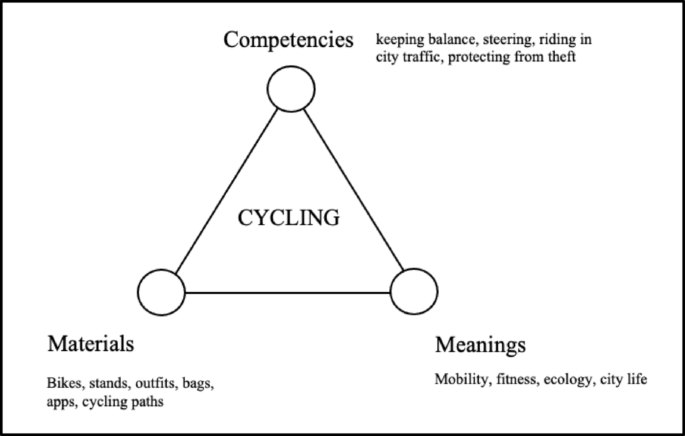
Cycling as a social practice (based on Shove et al. 2012)
From the practice-theoretical perspective, practices are linked together to form larger complexes. Some practices (like driving a car and listening to the radio) may be performed in physical and temporal proximity. Others (like buying groceries and preparing dinner) are coordinated and connected through mutual dependence. The social world is thus viewed as composed of constellations of practices that, in many ways, ‘restrict, enable and condition each other’ (Shove et al. 2012: 83).
Our idea that practice theories have the potential to conceptualise the relevance of knowledge derives from the specificity of the practice-theoretical approach to knowledge and knowing. First, from the practice-theoretical perspective, knowledge is not reducible to its explicit or codified aspects but embraces ways of understanding, knowing how, ways of wanting and feeling that are linked to each other within a practice (Reckwitz 2002: 253–254). Second, prioritising practices as fundamental units of social life results in the general assumption that knowledge should be treated as situated within practises (Nicolini et al. 2003; Gherardi 2008; Shove et al. 2012). It means that different forms of knowledge are seen as specific to practices, connected with the other constitutive elements (meanings, norms, ideas, materials and tools) and dependent on them. For example, knowing how to ride a bike makes sense only when there are specific tools and artefacts related to cycling and their associated meanings.
The PT perspective also assumes that knowledge may travel[1] across practices. While interconnected, all the constitutive elements of practice have some sort of independence in their own histories and futures, may belong to different practices and circulate between them (Pantzar and Shove 2010). Knowledge and competence are no different in this regard, yet the circulation of knowledge is not limited to mechanically putting knowledge to use in a new context. As situated, contextualised, and embedded within practices, knowledge is more complex than a thing-like entity that can be easily ‘transported’ from one context to another. The circulation of knowledge is thus conceived not as a free flow, exchange or acquisition but as a process of adaptation and re-contextualisation of knowledge through which knowledge takes root among the meanings, materials and competencies existing in the ‘receiving’ practice (Shove et al. 2012: 48–49). In what follows, we propose how these practice-theoretical views on knowledge may be expanded to account for the problem of relevance.
Relevance in the Practice-theoretical Lenses
As a starting point, we propose to treat the notion of the relevance of knowledge as regarding situations in which explicit, codified, research-based knowledge generated in a given knowledge-producing social context is moved to and appropriated in a different, knowledge-receiving one. Drawing on the practice-theoretical approach, we argue that the knowledge-producing and knowledge-receiving contexts can be conceptualised as practices.
This initial reframing has several consequences. First, as outlined above, the relevance has often been conceptualised in broad terms such as ‘research and practice’ or ‘science and policy-making’ relationships. The practice-theoretical perspective focuses on practices which are more fine-grained units of analysis. Thus, instead of operating with categories of ‘users’ of knowledge, ‘practitioners’, ‘decision-makers’, or ‘policymakers’, the practice-theoretical approach focuses on various specific practices in which these actors are engaged. For example, instead of treating policymaking as one unified ‘bloc’ to which knowledge is meant to be relevant, practice theories take on specific practices which policymaking consists of, such as strategic planning, negotiating with stakeholders, or communicating with the public, and ask what makes a given kind of knowledge relevant in this contexts. Second, while the notion of relevance has been often narrowed down to policy-relevance of scientific knowledge, the practice-theoretical perspective proposes a broader understanding that includes also other instances when explicit, codified, research-based knowledge travels from practices where it is produced to those where it is adopted and ‘comes to matter’ (Savransky 2016). The practice theoretical understanding acknowledges that research-based knowledge may be produced within specific fields of scientific research but also in various non-academic sites of knowledge production, such as public institutions, consultancies, think tanks, labs, projects, researchers networks, etc. Also, such knowledge may not only be adopted in policy-making but also in various practices that belong to organisational life, education, activism etc. Thus, in the proposed understanding, relevance refers not only to situations such as the use of findings from recent scientific studies on the effectiveness of carbon emission reduction strategies in the making of housing policy regulations by a national government (i.e., from science to policymaking), but also the usage of a study on the psychological conditions of students conducted by a network of student activist for university authorities (i.e., from civil society to a public institution), or the adoption of industry-funded research on sustainable materials into corporate product development planning (i.e., from private-sector R&D to business strategy). We believe that this broader understanding reflects the current diversity of knowledge-producing and -adopting contexts and helps to ‘embrace and mirror the actual empirical heterogeneity of how relevance is practised’ (Brunet et al. 2024: 7).
Moving on, we propose that knowledge may be regarded as relevant to a given knowledge-receiving practice when it can be recontextualised and integrated within it relatively easily and less relevant when it encounters friction during its integration or becomes refuted. In other words, knowledge is relevant when it may be woven into the ongoing activities, nexuses of ‘doings and sayings’ (Schatzki 2002: 23) that make up a given practice. Drawing on the model of practice proposed by Shove et al. (2012), we propose that such recontextualization of knowledge depends on building three critical linkages between the incoming knowledge and the elements that constitute the knowledge-receiving practice (meanings, materials, and competencies). Establishing connections with meanings requires adherence to the values, norms, aspirations, ideas and concepts that form the knowledge-receiving context. Making links with materials relies on compatibility with the artefacts, tools, and infrastructures already existing in the adopting practice. Linkages on the level of competencies require enough practical knowledge and understanding within the adopting practice to ‘decode’ the incoming knowledge, incorporate it and complement it with the existing know-how, know-that and other kinds of knowledge.
Finally, given the dynamic and open nature of practices, the relevance of knowledge should also be viewed as a dynamic and on-going phenomenon. In the practice-theoretical approach, practices are open-ended configurations that change as new elements are added, and the connections between the constituting elements alter or disappear (Schatzki 2002; Shove et al. 2012). Also, practitioners play an active role in reproducing practices as practices are “transformed, through the process of doing” (Shove et al. 2012: 41). It signals that, as practices evolve, some kinds of knowledge may no longer be relevant, while the space for some others may be opened. It also allows for understanding relevance as an achievement, depending on practitioners' active and reflexive efforts to respond to relevance expectations.
The Epistemic Packages
The proposed conceptualisation would, however, be incomplete without an understanding of how knowledge is articulated and ‘travels’ to the receiving practices. Here, we draw on two critical observations. First, on the classical argument that explicit, articulated and codified forms of knowledge are more ‘movable’ than tacit or embodied ones - the latter being acquired mainly through participation in a given practice (Polanyi 1966; Collins 2001). Second, we draw on the long line of research that emphasises the role of various kinds of objects - such as representations, inscriptions and boundary objects - in knowledge-production processes (Latour 1986; Rheinberger 1997; Star 2010; Coopmans et al. 2014). It should be noted that these studies generally distance themselves from the representational or mentalist positions that regard such objects as simple reflections and articulations of knowledge already existing ‘out-there’ in a finite form (Gherardi and Nicolini 2000). Instead, such objects are here treated as one of the ways in which knowledge exists in social life, and it is assumed that through making, circulating, appropriating and interacting with such objects ‘people act toward and with’ knowledge (Star 2010: 603).
Drawing on these assumptions, we borrow the metaphor of knowledge ‘packaging’ (Shove et al. 2012) to propose the term epistemic package as reflecting the composition of the heterogeneous elements and entities (including symbols, images, and artefacts) that are assembled and put together to embody some portion of knowledge and to enable its travel. Examples of a thus-conceived epistemic package may be a scientific article on the effectiveness of a drug, a PET scan of someone’s brain to be used in a surgical intervention, or a pictorial instruction for the set-up of an air purifying device. We assume that epistemic packages are produced to make knowledge explicit and movable. In other words, through the production of epistemic packages, research-based knowledge is externalised, travels and becomes available for knowledge-receiving practices, where it later becomes appropriated and recontextualised (Fig. 2).
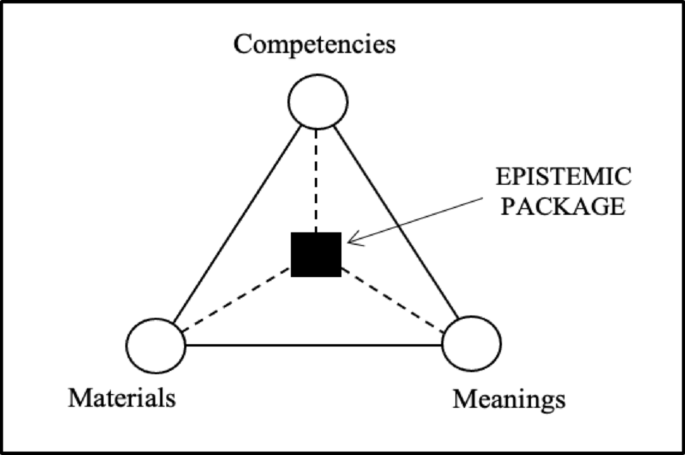
Incorporating an epistemic package within a knowledge-receiving practice
We suggest that making epistemic packages is not just a straightforward act of articulation. Instead, we see it as a complex endeavour of making assemblages that make knowledge movable and allow for its integration and re-contextualisation within the receiving practice. We also emphasise that for achieving relevance it is essential to provide the compatibility of a given epistemic package with the practice of its adoption - not only to enable its decoding or completion with the existing knowledge (Gherardi and Miele 2018) but also integration with the tools, materials and infrastructures as well as the meanings (ideas, concepts, values, symbols, etc.). It also means that the adjustment of epistemic packages to the knowledge-adopting practice is much more consequential for achieving relevance than maintaining links with the meanings, materials and competencies of practice in which knowledge originated.
It is our contention that the notion of the epistemic package differentiates from the well-established concepts of boundary objects (Star & Griesemer 1989) and immutable mobiles (Latour 1986). The former was developed ‘to analyse the nature of cooperative work in the absence of consensus’ (Star 2010: 604), and the research question that underlies it is how cooperation between social worlds or communities is possible. Instead, the concept of epistemic packages is proposed to understand how research-based knowledge is made movable and relatable. Hence, the relation between the knowledge-producing and -receiving social contexts is more like a relation between producers and consumers of knowledge rather than between cooperators. The notion of immutable mobile, in turn, focuses on objects that are simultaneously mobile and stable so that they may be moved across social contexts relatively intact (Latour 1986). It is not necessarily the case with epistemic packages, as the emphasis is put here on incorporating such objects through making connections with the receiving practice - a process in which epistemic objects may also be modified, translated and adjusted. In other words, epistemic packages are made to be compatible and connectable, not immutable.
By introducing the notion of the epistemic package we by no means assume that all kinds of knowledge may be successfully translated into such objects. It also does not question that many forms and aspects of knowledge, mainly implicit, tacit and embodied, are predominantly transmitted through active participation in a given practice. Furthermore, emphasising the role of epistemic packages does not preclude varied unintended forms of knowledge ‘translation’, ‘diffusion’ or ‘travel’ between social domains (Czarniawska and Sevon 1996; Røvik 2016; Eekelen 2022). However, we propose this notion to conceptualise the intended circulation of knowledge in its more explicit forms, as emphasised in the prior debate on the relevance of knowledge.
To sum up, from the practice-theoretical perspective, the relevance of knowledge is a relational phenomenon, depending on a multi-dimensional compatibility between a given piece of knowledge as embedded in an epistemic package and a specific knowledge-receiving practice. This view suggests that knowledge becomes relevant not due to its intrinsic or universal attributes but only in relation to a specific knowledge-receiving context (practice) and its internal configuration. It means that such attributes as epistemic quality, direct instrumentality, or clarity of articulation cannot determine relevance alone - they matter only to the extent they matter in a specific knowledge-receiving practice. A given piece of knowledge may still be refuted or encounter significant resistance when it is incompatible with the material elements of the practice to which it travels (for example, existing tools may make storage, passing, or referring to this knowledge difficult, or there is lack of know-how allowing for absorbing a given piece of knowledge). Thus conceived relevance is also a dynamic phenomenon, depending on the ongoing changes within practices and the efforts of practitioners engaged in knowledge production, appropriation and reception.
In what follows, we employ this practice-theory-inspired account of relevance to examine a practical domain in which research-based knowledge is produced to be relevant for its receivers. By doing so, we aim to accomplish two aims. First, we illustrate how the proposed framework may be operationalized in the empirical study. Thus, using our fieldwork data, we show: What are the practices for which knowledge is intended? How are they configured? What kinds of epistemic packages are built? How do they fit into the receiving practices? Second, we demonstrate the explanatory capabilities of the practice-theoretical framework by attempting to account for a situation in which potentially highly relevant knowledge (instrumental, understandable, timely-delivered etc.) encounters significant friction in some contexts of its adoption, while in others it is well-received.
Method
Case Selection
We illustrate the proposed theoretical framework with empirical material from our fieldwork in the professional domain called User Experience (UX). While it is not well known to broader sociological audiences, UX has been a significant field of activities performed by technological companies and related to creating digital products in the last decades (Garrety, Badhan 2004; Rudnicki 2023; Reeves 2019). It relies on the central assumption that building a commercially successful digital product requires not only technological expertise but also a research-based understanding of people’s (‘users’) behaviours, needs and capabilities (DMI 2015; Sheppard et al. 2018). It has led to the emergence and institutionalisation of user experience research (UX research), which is commercial social research conducted to produce knowledge about users that is meant to be used in digital product making (Kuniavsky et al. 2003; Goodwin 2009).
We treat our case study as an ‘extreme’ one (Yin 2004; Flyvbjerg 2011). First, while UX research does not produce scientific knowledge per se, it generates knowledge that is explicit, research-based, utilises social research methods, enjoys the aura of objectivity, and is meant to be adopted widely within organisations, particularly in the activities related to design, product management and software development. As proposed earlier, the notion of relevance should encompass a variety of knowledge-producing contexts, not only those restricted to science; our case provides an example of such a situation. Also, in our case, knowledge production and adoption occur in proximity, often within the same organisation; thus, one could expect knowledge production to be already highly contextualised and relevant. However, as we found out, in some product development practices, this knowledge becomes widely accepted and routinely put to use, while in others, it is marginalised. This creates a challenge to the existing concepts of relevance. If knowledge produced in UX research is thematically related, instrumental, simply articulated and timely delivered (as often proposed in the relevance advisory), why is it well-received in some areas, but encounters resistance in others? If it is produced not in two distinct domains separated by an institutional gap but in a relatively unified environment, what makes it still not so relevant for some contexts of use?
Data Collection
In our fieldwork, we employed a mixed-methods approach that combined interviews, non-participant observations and a literature review. The data collection process took place from 2019 to 2020. We started with semi-structured interviews with members of UX-related professions, varying the sample according to the participants' experiences in the profession and the kinds of companies they worked for. The interviews were aimed to bring a detailed view of the participants' daily work activities. At this stage, we conducted 30 interviews, lasting 45 to 80 minutes, 26 face-to-face and four by video call.
Our second data collection method was a non-systematic review of UX-related literature and other professional sources, such as handbooks, how-to manuals, articles, reports, blogs, social media posts, discussions, and presentations from professional conferences and meet-ups. We also participated in four major country-level UX conferences, during which we took unstructured notes and pictures during presentations and panels. The main aim of this part was to explore meanings and aspirations specific to the UX domain.
The interviews and literature review were supplemented by four weeks of visits to three UX-related organisations: one UX agency and two in-house UX departments of larger companies. These visits provided a more detailed view of the specifics of the particular projects, especially the materials and tools used and produced in daily UX-related activities. We tried to reconstruct how the projects unfolded, how UX research was organised and conducted in these projects, and how the data collected were further processed and utilised in these companies. We also attempted to gain some understanding of what professionals representing different positions (researchers, designers, managers, etc.) have done in the course of the same research projects as well as to gather non-researchers views on UX research. We did 25 interviews at this stage and examined the research-related materials such as reports, visualisations, templates, and screenshots.
The final empirical material for this article consisted of 55 interviews, pictures and other materials collected during on-site visits, and content found in UX-related literature. For the analysis presented in this article, we used parts of our dataset that allowed us to reconstruct the knowledge production within UX research and its adoption in other practices.
Findings
In what follows, we focus on three practices observed in our fieldwork. The practice we treat as the primary locus of knowledge production is UX research. In this practice, UX researchers examined how people interacted with a digital product (such as mobile banking application, car navigation system, smart TV interface, and many others) and produced knowledge about users’ behaviours, needs and preferences. This knowledge was meant to be adopted primarily within two other organisational practices: UX design and product management. UX design was a practice in which it was determined what elements would appear on the screen and how the application would respond to users’ actions. In this practice, digital ‘prototypes’ of the final application were designed and later passed on to UX research to check if they are understandable, easy to operate and adequately responding to users’ needs. If approved, they were handed over to do the programming, and the final product was put on the market, monitored and maintained. The second knowledge-adopting practice was product management. It was about guiding the development of digital products from initial idea to final release and coordinating research, design, and programming activities. Among other things, product managers determined what product elements should be built or modified and when - for this they could use UX research results as source of information and guidance. We treat these three practices as a complex (i.e., a set of practices held together by bonds of co-dependence (Shove et al. 2012)) within which knowledge was produced and circulated and in what follows we propose a practice-theoretical explanation of ther relevance of knowledge in this environment.
Relevance Accomplished
Throughout our fieldwork, we found that knowledge produced in UX research was overwhelmingly well accepted and routinely utilised in UX design. Not only was it regarded as useful and valuable, but there was a widespread belief that 'proper' UX design should only happen if supported by UX research as its preparation and verification. Moreover, designers were often the ones who advocated for doing more research, which may be surprising given that the UX research results served partly as a way of evaluating their work, thus one could easily imagine tension or reluctance rather than appraisal. We take the widespread use and appreciation of UX research-based knowledge in UX design as the indicator of its relevance for this context and try to explain it by employing our practice-theoretical model.
We will first focus on epistemic packages in which UX research results were embedded. In our fieldwork, the dominant form of the epistemic package was a UX research report presenting the results of ‘usability testing’ (a research technique in which participants were observed, mainly in laboratory-like settings, as they performed tasks using clickable versions of interface prototypes of applications) which was done to evaluate the design and uncover potential usability problems. The research reports had a highly standardized composition across the organisations and projects we investigated. They were typically prepared as PowerPoint-style presentations with a series of slides detailing the difficulties that users had while using an application prototype in a one-finding-per-slide manner. Slides had a highly standarised structure: half of each slide was a picture of a particular screen with the problematic elements visualised; the other half consisted of a text box in which an ‘observation’ (description of a particular problem) and a ‘recommendation’ (suggestion how it could be corrected) were given. Often, ‘problems’ were also visually categorised on a few-point scale of criticality - from ones needing to be corrected immediately to those with lower priority (Fig. 3).
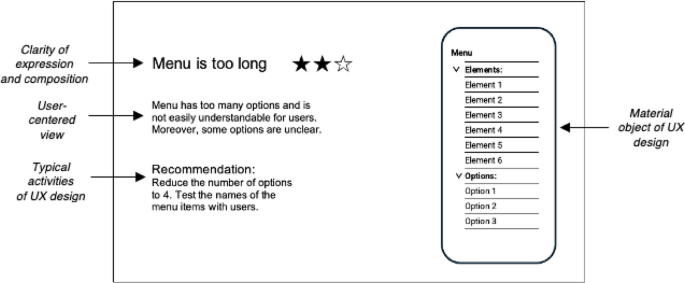
Example of a UX research report slide (based on fieldwork materials)
On the one hand, the construction of UX reports fulfilled many of the requirements pointed out by the previous studies on relevance. The findings were articulated clearly and unambiguously, included hierarchically ordered recommendations and offered instrumental knowledge that could help designers in making product-related decisions. However, following our practice-theoretical view on relevance, we argue that it was more into the composition of these epistemic packages than just a clear-cut articulation. In our view, these reports were strictly compatible with how UX design was organised by providing a relatively easy connection with meanings, materials and competencies constituting this practice (Fig. 4), which we now explain in more detail.
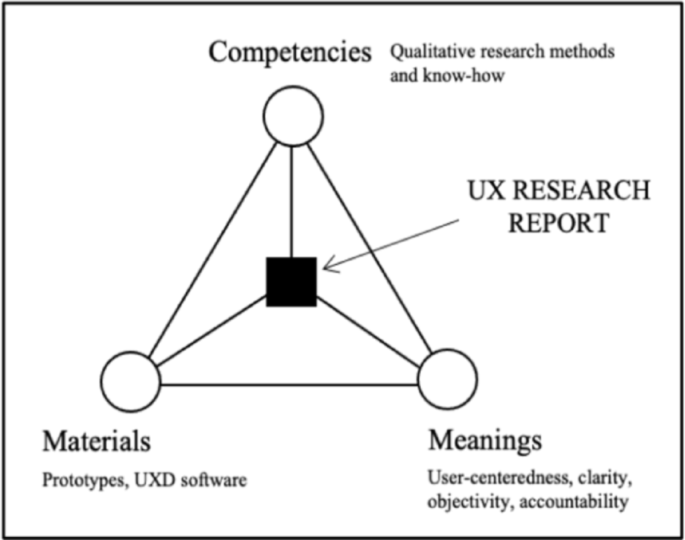
Successful recontextualisation of UX research report within UX design
On the level of meanings, we found that UX design was oriented around several central concepts and values: user-centeredness (the idea that the design of digital products should be useful, enjoyable, and provide positive experiences for users), ingenuity (the aspiration to deliver creative yet practical solutions), rationalism (the belief that design should be grounded in facts rather than guided by intuition or self-expression), and clarity (a preference for minimalistic and balanced aesthetics). UX research reports as epistemic packages materially embodied most of these concepts. They reflected rationalism by offering a series of research-based findings that translated the abstract and somewhat vague concept of ‘user experience’ into something objectified, observable and measurable. The visual simplicity of the reports resonated well with the ideas of clarity and convenience important in UX design. Even more importantly, the reports emphasised and enacted user-centeredness as they focused solely on usability problems, marginalising the technical and organisational aspects. It resonated well with the user-centered approach that one of the UX designers we interviewed expressed in this way:
For me, in this particular role as a UX designer, it’s not interesting what is feasible for developers [software engineers]. I’m not interested in what the deadlines are, I’m not interested in (...) political relationships between stakeholders. I’m interested in how to make this project look better and be more useful for the user [R50, UX designer, emphasis ours].
Regarding material aspects, the reports' composition provided a direct fit between UX research reports and the tools, technologies, and objects widely used in UX design. Designing was essentially about creating digital prototypes, typically consisting of a series of screens with clickable elements, which were prepared with the help of specialised software. Visualisations of precisely these screens appeared on the slides, which allowed designers to straightforwardly refer to the elements of the prototypes on which they worked and handle the subsequent usability problems with their customary tools. In other words, the objects on which designers worked directly corresponded with the objects examined during research and incorporated in the epistemic packages; no extra translations were needed to ‘weave’ them into the ongoing designerly activities.
Finally, on the competencies level, we found enough research-related skills in UX design to comprehend and use the research results relatively easily. At the time of our fieldwork, it was customary to expect UX designers to possess a considerable understanding of UX research methodology and even be able to participate in some as assistant researchers. Additionally, popular manuals and how-to materials on UX design included quite extensive sections related to the research process and methods and the postgraduate UX-related programs included a considerable proportion of teaching hours related to UX research. Thus, UX designers simply knew enough about UX research to understand and use knowledge produced there.
Drawing on these observations, we argue that there was significant compatibility between knowledge produced within UX research and embedded in UX reports with the elements constituting UX design as a practice. However, it should be noted that this was a compatibility of knowledge to the knowledge-adopting practice, not to the knowledge-producing one. The reports included very limited references to research activities. The methodological sections were typically restricted to one or two slides (in comparison to several dozens of slides with usability problems, screens and recommendations), and they omitted not only the contingencies and messiness involved in conducting research (of which UX researchers often spoke in our interviews), but also the methodological aspects of research (meanings), the practical know-how required to do usability testing (competencies), and tools and technologies involved in doing fieldwork (materials). Thus, UX research results embedded in the standard epistemic package were ‘travelling light’, largely abstracted and detached from the practice of their origin, but configured as compatible with the knowledge-adopting practice.
Limited Relevance
The adoption of knowledge produced in UX research was, however, not that smooth in other practices involved in creating digital products. It may be surprising given the official narrative in this field heralding the importance of understanding users’ needs and reactions as pivotal for ‘creating tech products that customers love’ (Cagan 2018). Also, financially, while doing research entailed some costs, testing prototypes with users could have been regarded as a reasonable investment as it reduced the number of usability problems to be discovered after the product launch and could help to avoid spending tens or hundreds of thousands of euros on features that will not be used by anyone [R53, UX team lead]. Thus, theoretically, knowledge produced in UX research should be highly relevant not only for UX design but also for other practices involved in the creation of digital products. The situation we observed was, however, quite the opposite - UX researchers and designers recurrently complained about ‘decisions out of thin air, not research’, ‘treating research as a fad’, ‘underestimation of users by the business’ and ‘lack of research budget’ (Mościchowska et al. 2018: 47). At the same time, it was difficult to explain these problems as resulting from poor quality or articulation of knowledge because, as discussed earlier, UX reports were largely fulfilling expectations in this regard. It is also hard to attribute this difficulty to the distance between knowledge producers and knowledge adopters as UX research was often conducted not by external companies but within companies that were using the results (‘in-house’), which entailed plenty of opportunities for knowledge producers and adopters to interact and cooperate.
In trying to account for this apparent paradox, we will employ our practice-theoretical understanding to examine the relevance of knowledge produced in UX research for the practice of product management. As signalled earlier, it was - next to UX design - another practice to which UX research results were primarily addressed, yet the one in which they were treated with much more reluctance. Starting from the level of meanings, at the core of product management, the central ones were effectiveness, coordination, and the focus on short-term business outcomes. Product managers aspired to orchestrate company’s efforts in the possibly cost-effective building of products that would perform well on the market, which required negotiation between teams of employees responsible for different parts of a product, balancing priorities, agile planning and distribution of the workload. While user-centeredness was generally acknowledged and officially enouraged in product management as a factor contributing to the product’s success, it tended to be regarded secondary. As one product manager put it:
(...) the UX people talk often about their findings in such a way that... well, if we do it, then [users] will love us (...) but how does it translate into business value? Well, what does it mean to me, how do I prioritise it, well... how does one know how important it is concerning the other features? [R48, product manager]
Similarly, when it comes to skills, know-how, and practical expertise, doing product management in a competent way required organising teamwork, reporting the measurable outcomes and balancing priorities. Focusing on users by referring to UX research results was much less important and, accordingly, while popular product management handbooks included some information about UX research, it was generally more restricted and less emphasised than in the case of UX design. Overall, we found that within product management, the understanding of UX research – why do it, how to do it, and how to use it – was generally much more restricted than in UX design.
Furthermore, the epistemic packages produced in UX research were much less compatible with the product management tools and technologies. In our fieldwork, one of the primary tools in product management were Excel spreadsheets, where product managers were expected to report the progress of the development process, often referring to quantified metrics. However, the mostly qualitative and visual PowerPoint reports were challenging to translate into numbers or squeeze into tables and charts. As one UX researcher we interviewed commented: It is already so automatic that the question is always: ‘Do we measure it?’ and ‘Do we have any data for that?’ [R52, UX researcher]. Another complained: we have already had such discussions (...) how to translate the findings from the reports (...) into such a language [of product management] (...) – where to put it, which tables in Excel, where to plan it, what priority to give it and so on [R46, UX researcher]. Importantly, this demand for numbers was not aimed at increasing epistemic trust (Porter 1995) but rather at integrating knowledge with product management tools and everyday routines. Therefore, the lack of fit between UX research reports and product management activities was thus not an epistemic problem but a practical one (Fig. 5).
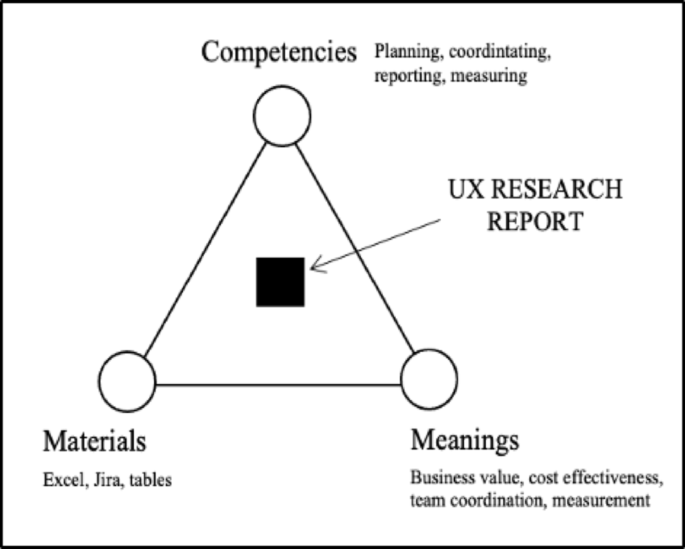
Problematic recontextualization of UX research report within Product Management
Overall, it was not that UX research produced knowledge that was too general, untimely, thematically unrelated, ambiguous, or not instrumental. It was also not that product managers doubted its epistemic quality or questioned the sense of building user-friendly products. It was just that this latter aspiration was subordinate to other values, meanings and aspirations, such as cost-efficiency and teamwork coordination. Also, while the UX research reports clearly showed usability problems that UX designers could later handle, they could not show exactly how much more profit the correction of a given problem would yield, and they offered no numbers that product managers could put into their spreadsheets or straightforwardly do something about From the practice-theoretical perspective, it limited the relevance of UX research reports to this practice.
Relevance in-the-making
So far, we have analysed relevance relatively statically, as simply achieved or not. In this section, we will demonstrate the dynamic aspects of relevance by showing how it changed in our fieldwork and how these transformations may be interpreted in our framework.
Starting from epistemic packages, while the UX research reports in the form analysed above were by far the most popular ones in the domain we investigated, we also noticed some experiments with other ways of articulating research results. One UX researcher told us that she was explicitly asked by the product manager not to prepare the standard Power-Point-style report but only a short Excel spreadsheet including no technical details about the fieldwork (...) but only unequivocal recommendations [R12, UX researcher] that he could later use in planning the workflow in the project. The finally prepared file enlisted the usability problems identified during the study in a simple table with only three columns: ‘problem descriptions’, ‘recommendations’ and ‘priority levels’. While this file echoed the elements of the standard UX research report, there were some changes involved (an Excel table instead of PowerPoint slides, short descriptions but no screenshots) that, though small, helped to align this epistemic package with the organisation of product management oriented on making decisions about tasks (not on direct intervening in the composition of elements on the screen), operating with Excel spreadsheets (not design software), and showing little interest in research ambiguities.
In another organisation, after preparing a standard Power-Point-style report, a UX researcher attempted to make it more useful for her organisation by translating the report into a set of 80 so-called ‘Jira tickets’. Jira was a popular software used in product management to coordinate the progress of teamwork by dividing the volume of work into separate tasks (tickets), assigning them to selected employees, and monitoring the work progress. In our case, the laboriously developed tickets included single-sentence-long user stories based on the research, recommendations, business justifications for handling problems, examples of how similar usability problems had been handled in competitive products, and links to relevant parts of the research report for further reference. The tickets were then shared with a product manager responsible for this product, who calculated the costs of implementing each of the recommendations and assigned tasks to particular software engineers. When asked what would have happened if the report stayed in the standard Power-Point form, the researcher claimed: If so, this report would probably be unread [R52, UX researcher].
These observations exemplify the ways in which UX researchers in our fieldwork experimented with creating new epistemic packages to make their findings more relevant and appreciated in product management. Noteworthy, they neither attempted to make the results simpler, more understandable or rhetorically persuasive, nor tried to demonstrate or enhance the epistemic advantages of the knowledge they produced. The new kinds of epistemic packages relied instead on translating knowledge into forms that aligned better with routine ways in which product management was done, what tools were used (Excel, Jira) and what meanings were prioritized (task distribution, monitoring etc.). These changes in epistemic packages were intentional, innovative, and required an effort that extended beyond standard ways of doing fieldwork or data analysis.
Other changes in relevance were related to the evolution of the practices of knowledge adoption. Some interviewees with longer experience in the UX domain told us that a few years back even less UX research had been done, fewer job positions for UX researchers had been available, and the awareness about the role of research had been significantly lower. Reportedly, at the time of our study, organizations were generally more willing to put user-centeredness in companies’ strategies, values and operations, which entailed changes in work routines, project schedules, and budget allocation (for example, securing time and budget for UX research). We interpret these changes as signalling reconfigurations of organisational practices that made them somewhat more receptive to UX research results, even if it was often below the expectations of UX professionals. We also observed that many UX researchers were actively engaged in what they called ‘evangelization’. It included such activities as offering ad hoc explanations of research methodologies, stepping up as ‘the voice of users’ during company meetings, encouraging non-researchers to watch online usability-testing sessions, or inviting non-researchers (particularly product managers and software engineers) to take part in data collection and analytics workshops. These kinds of activities were common and consumed a surprisingly significant proportion of their work time. Importantly, the ‘evangelization’ was not just a form of ‘selling’ or ‘pitching’ specific research projects, it was rather a long-term promotion of user-centredness, coupled with sharing knowledge (such as how to do user testing) and diffusing concepts (such as ‘empathy’ with users). One of the UX researchers told us that a few months after she had invited an initially research-sceptic product manager to watch an online streaming of usability testing, she saw his photo on social media on which they were themselves sitting at the client's place doing usability tests. I thought, I can die now. So yeah, they just started doing the UX research on their own [R12, UX researcher]. It was a highly expected effect of ‘evangelisation’.
In the practice-theoretical lenses, ‘evangelisation’ can be seen as an activity through which knowledge producers attempted to ‘export’ some meanings and competencies to the adopting practices to make them more receptive to UX research results. In doing so, they acted analogically to producers of consumer goods trying to shape consumer practices and create demand instead of simply meeting it (Rinkinen et al. 2020). Overall, these observations show that relevance of knowledge may change due to the ongoing evolution of practices and by active efforts of practitioners. It also shows relevance as something that may be achieved and ‘done’ in situational and reflexive ways (Sigl and Fochler 2024). Notably, these activities were mostly oriented on mundane, extra-epistemic aspects, such as ‘tinkering’ with the composition of epistemic packages or organising workshops to promote UX-related concepts, rather than on the production of knowledge per se.
Discussion and Conclusions
In this article, we proposed a novel framework for conceptualising the relevance of knowledge. It draws on the practice-theoretical approach and posits relevance as the ease of contextualization and integration of knowledge in the form of an epistemic package within a specific knowledge-receiving practice. Our case study demonstrated how this understanding of relevance may be operationalised and used analytically, and the observed pattern was congruent with our model. In the concluding section, we discuss our findings and relate them to themes of the STS debate on relevance.
On a theoretical level, our conceptualisation supports the view that relevance is a relational phenomenon depending on the relationship between knowledge and the context of adoption. While understanding relevance as relational and context-dependent is not new in sociology (Savransky 2016; Brunet 2024), the novelty and analytical value of our model lies in offering a specific way of conceptualising this relationality as linkages between the epistemic package and the meanings, materials and competencies that constitute the practice in which knowledge arrives. The ability to grasp the specificity of knowledge as well as knowledge-producing and -adopting contexts affords new analytical capabilities in explaining what makes knowledge relevant and how relevance may be accomplished. We earlier argued that the existing conceptualisations emphasise either the intrinsic characteristics of knowledge (Cairney and Kwiatkowski 2017; Marshall et al. 2017; Olander 2017; Oliver and Cairney 2019) or the cooperation between knowledge producers and adopters as the factors explaining relevance (Gibbons et al. 1994; Jasanoff 2010; Beck 2011). While our model and findings do not question that the characteristics of knowledge matter, they suggest that relevance is a relational, not universal, phenomenon. This means that it may not be enough to produce clearly articulated, instrumental, thematically related, and timely-delivered knowledge to ensure its relevance. What matters more is the compatibility between knowledge and the practice of adoption. Also, while there is a tendency in relevance studies to operate with broad categories such as ‘science’ and ‘practice’, our findings show that specific and detailed aspects of practices may condition relevance. Furthermore, our findings show that relevance may be an issue even if the institutional distance between knowledge producers and receivers is relatively small (and much smaller than, for example, between scientists and policy-makers who represent distinct institutional fields). This questions whether knowledge produced close to the context of adoption can automatically be considered relevant (as may be implicated by the Mode 2 concept and the co-production approach). We believe that the practice-theoretical model may be useful as a framework that helps to zoom in on the specificity and diversity of knowledge production contexts.
Our proposal also suggests focusing the attention of the relevance studies on the contexts of knowledge adoption, not on the contexts of production. The main reason for that is that according to our model, it is the relationship between knowledge and the practice of adoption that matters for relevance. To use a metaphor proposed by John Law, adopting knowledge produced within UX research was ‘like buying a personal computer rather than understanding the electronics, and the physics embedded in the electronics and assembling one out of components’ (2004: 33). It does not mean that the values, meanings, and standards (including scientific rigour) constituting the context in which knowledge originates are of no consequence for relevance, but only that they should be viewed from the perspective of the knowledge-adopting practice, and as a part of a larger pool of meanings, values and aspirations that make it up. At the same time, our practice-theoretical analysis shows the sometimes pivotal role of the mundane, everyday, technical and material aspects of knowledge articulation. These aspects are typically emphasised in the practice-theoretical studies and what we observed in our fieldwork also suggests that relevance should be viewed as materially embedded, conditioned and constrained. These aspects have long been acknowledged in STS studies of knowledge production, yet they were surprisingly under-explored in the prior studies of relevance.
Finally, our findings also show some dynamic aspects of relevance, particularly by offering examples of situations when ‘tinkering’ with epistemic packages led to improving relevance and showing relevance as conditioned by changes in the knowledge-receiving practices. In our fieldwork, relevance depended partially on knowledge producers’ efforts that extended far beyond just ‘transferring’ or ‘selling’ knowledge and required a significant amount of understanding of knowledge-adopting practices coupled with competence for ‘evangelisation’, which required mindset and capabilities that seem different from those included in the standard researchers’ skill set. While acknowledging the ways in which actors may creatively engage in achieving relevance, our model also allows to see it as conditioned by the evolution of practices, also in ways unintended and uncontrollable by the actors. Overall, achieving relevance seems to be less about fulfilling a stable and universal set of criteria and more about hitting a multifaceted and moving target.
It should also be noted that our analysis and framework left some questions untouched. The practice-theoretical view has problems grasping the role of institutional factors such as legal regulations, finances or systems of knowledge production. While it does not seem plausible to assume that practices exist in a vacuum, abstracted from their institutional context, there is no agreement within the practice-theoretical studies as to how to approach them - operating with the ‘flat ontologies’ models seems to dominate (Shove 2022), yet there are also multi-level perspectives present (Nicolini 2017). As institutional factors have long been considered pivotal for understanding knowledge production and use, it could be valuable to accommodate these aspects in the practice-theoretical approach to relevance in a fuller way. Also, as our analysis is limited to a single case study, further empirical explorations are required to test the analytical value of our model. One potential avenue for exploration is to evaluate how our model performs in more typical research areas concerning relevance - for example, in examining the adoption of knowledge produced in the environmental or health sciences in policymaking. Another intertesting question could be to try how the model can be useful in the curerently proliferating inter- and transdisciplinary research addressing complex and multi-faceted problems (Bammer et al. 2020). Finally, given the specificity of our fieldwork, it seems worthwhile to see how the proposed framework could be referred to study the adoption of socially-based concepts, such as ‘ethics by design’ (Brey and Dainow 2024), within the highly technological domain.
In conclusion, we suggest that the proposed framework may be inspiring for strategies, policies and interventions aiming to increase the relevance of knowledge. Whether it is about, for example, adopting biodiversity research findings in, for instance, planning the reintroducion of species to national parks, developing a regional strategy supporting eco-tourism, or monitoring the corporate sustainability goals, our model suggests moving beyond universalist criteria and taking into account the specificities of the knowledge-adopting contexts. It would entail a deep understanding of how these knowledge-adopting practices are performed and taking into account their mundane, routine and socio-material aspects. To be more specific, our relational model suggests two main kinds of activities that knowledge producers may take to improve the relevance of knowledge. The first one is the experimentation with epistemic packages to make them more aligned to how the specific knowledge-adopting practice is organised and thus facilitate the integration of knowledge into the ongoing activities. The second one is trying to add new meanings and competencies to the adopting practises and thus to re-orienting them so they would become more receptive to the incoming knowledge. Both of these approaches require skills and training that differ significantly from those typically possessed by knowledge producers, especially in the scientific community. This discrepancy highlights the need for reflection on the competencies needed to achieve relevance (Bammer et al. 2020; Sigl and Fochler 2024) and is part of the answer to why this task remains so challenging.
References
Augier, Mie, and James G. March. 2007. The pursuit of relevance in management education. California Management Review 49(3):129–146.
Bammer, Gabriele et al. 2020. Expertise in research integration and implementation for tackling complex problems: when is it needed, where can it be found and how can it be strengthened? Palgrave Communications 6(1):1–16.
Bandola-Gill, Justyna. 2019. Between relevance and excellence? Research impact agenda and the production of policy knowledge. Science and Public Policy 46(6):895–905.
Bartunek, Jean Marie, and Sara Lynn Rynes. 2014. Academics and practitioners are alike and unlike: The paradoxes of academic–practitioner relationships. Journal of Management 40(5):1181–1201.
Beck, Silke. 2011. Moving beyond the linear model of expertise? IPCC and the test of adaptation. Regional Environmental Change 11(2):297–306.
Bouma, Johan, and Peter Droogers. 2007. Translating soil science into environmental policy: a case study on implementing the EU soil protection strategy in The Netherlands. Environmental Science & Policy 10(5):454–463
Boswell, Christina, and Katherine Smith. 2017. Rethinking policy ‘impact’: four models of research-policy relations. Palgrave Communications 3(1):1–10.
Brey, Philip, and Brandt Dainow. 2024. Ethics by design for artificial intelligence. AI and Ethics 4(4):1265–1277.
Brunet, Lucas. 2024. Mapping for Mapping’s Sake? Ecosystems Services Maps and the Modes of (Ir)relevance of Ecological Knowledge for Nature Conservation. Minerva 63(2):231–255.
Brunet, Lucas, Maximilian Fochler, Ruth Müller, and Lisa Sigl. 2024. Modes of Relevance in Research. Towards Understanding the Promises and Possibilities of Doing Relevance. Minerva 63(2):183–203.
Cairney, Paul, and Richard Kwiatkowski. 2017. How to communicate effectively with policymakers: combine insights from psychology and policy studies. Palgrave Communications 3(1):1–8
Cagan, Marty. 2018. Inspired. How to create tech product customer love. Wiley.
Collins, Harry M. 2001. Tacit knowledge, trust and the Q of sapphire. Social Studies of Science 31(1):71–85.
Collins, Randall. 1994. Why the Social Sciences Won’t Become High-Consensus Rapid Discovery Science. Sociological Forum 9(2):155–177.
Coopmans, Catelijne, Janet Vertesi, Michael Lynch, and Steve Woolgar. eds. 2014. Representation is scientific practice revisited. Cambridge: MIT Press.
Czarniawska, Barbara, Guje Sevón, B. Czarniawska, and G. Sevón. eds. 1996. Translating organizational change: 13–48. De Gruyter.
Dilling, Lisa, and Maria Carmen Lemos. 2011. Creating usable science: Opportunities and constraints for climate knowledge use and their implications for science policy. Global environmental change 21(2):680–689.
DMI (Design Management Institute). 2015. The Power and Value of Design Continues to Grow Across the S&P 500. Available at: https://www.dmi.org/page/DesignValue/The-Value-of-Design-.html (Accessed 3 September 2021).
Eekelen, Bregje F. van. 2022. Traveling Concepts: Anthropological Engage- ments with Histories of Social Science. Annual Review of Anthropology 51:251–269.
Etzkowitz, Henry, and Loet Leydesdorff. 2000. The dynamics of innovation: from National Systems and Mode 2 to a Triple Helix of university–industry–government relations. Research Policy 29(2):109–123.
Flyvbjerg, Bent. 2011. Case Study. In The Sage Handbook of Qualitative Research, eds. N. K. Denzin, and Y. S. Lincoln. 301–316. Thousand Oaks, CA: SAGE.
Garrety, Karin, and Richard Badham. 2004. User-centered design and the normative politics of technology. Science, Technology, & Human Values 29(2):191–212.
Geiger, Ben Baumberg. 2021. Performing Trustworthiness: The ‘Credibility Work’ of Prominent Sociologists. Sociology 55(4):785–802.
Gherardi, S. 2008. Situated knowledge and situated action: What do practice-based studies promise. In The SAGE handbook of new approaches in management and organization, 516-525.
Gherardi, Silvia. 2009. Organizational knowledge: The texture of workplace learning. Wiley.
Gherardi, Silvia, and Davide Nicolini. 2000. To transfer is to transform: The circulation of safety knowledge. Organization 7(2):329–348.
Gherardi, Silvia, and Francesco Miele. 2018. Knowledge management from a social perspective: the contribution of practice-based studies. In The Palgrave Handbook of Knowledge Management, 151–176. Cham: Palgrave Macmillan.
Gibbons, Michael, Camille Limoges, Peter Scott, and Simon Schwartzman, Helga Nowotny. 1994. The New Production of Knowledge: The Dynamics of Science and Research in Contemporary Societies. London: SAGE.
Goodwin, Kim. 2009. Designing for the digital age: How to create human-cen-tered products and services. Wiley Publishing Inc.
Grundmann, Reiner. 2017. The problem of expertise in knowledge societies. Minerva 55(1):25–48.
Grundmann, Reiner and Simone Rödder. 2019. Sociological perspectives on earth system modeling. Journal of Advances in Modeling Earth Systems 11:3878–3892
Hermansen, Erlend A. T., Göran Bård Lahn, G. Sundqvist, and Øye Eirik. 2021. Post-Paris policy relevance: lessons from the IPCC SR15 process. Climatic Change 169:1–18.
Hessels, Laurens K., and Harro van Lente. 2011. Practical applications as a source of credibility: A comparison of three fields of Dutch academic chemistry. Minerva 49:215–240.
Hui, Allison, Theodore Schatzki, and Elizabeth Shove. 2017. The nexus of practices. In Connections, constellations, practitioners, London, New York: Routledge.
Jasanoff, Sheila. 2010. A new climate for society. Theory Culture & Society 27(2–3):233–253.
Kieser, Alfred, Alexander Nicolai, and David Seidl. 2015. The practical relevance of management research: Turning the debate on relevance into a rigorous scientific research program. Academy of Management annals 9(1):143–233.
Kuniavsky, Mike, Elizabeth Goodman, and Andrea Moed. 2003. Observing the user experience: A practitioner’s guide to user research. Elsevier.
Latour, Bruno. 1986. Visualization and Cognition. Thinking With Eyes and Hands. Knowledge and society Studies in the Sociology of Culture Past and Present 6(6):1–40.
Latour, Bruno. 1988. The Pasteurization of France. Cambridge, MA: Harvard University Press.
Law, John. 2004. After method: Mess in social science research. Routledge.
Lentsch, Justus and Peter Weingart. 2011 Introduction: The quest for quality as a challenge to scientific policy advice: An overdue debate? In The politics of scientific advice: Institutional design for quality assurance, eds. Justus Lentsch, and Peter Weingart. 3–18. Cambridge: Cambridge University Press.
Marshall, Nadine, Neil Adger, and Simon Attwood et al. 2017. Empirically derived guidance for social scientists to influence environmental policy. Plos One 12(3):e0171950.
Mościchowska, Iga, Joanna Rutkowska and Tomasz Skórski . 2018. User experience i product design w Polsce 2018.
Nicolai, Alexander, and David Seidl. 2010. That’s relevant! Different forms of practical relevance in management science. Organization Studies 31(9–10):1257–1285.
Nicolini, Davide. 2012. Practice theory, work, and organization: An introduction. OUP Oxford.
Nicolini, Davide. 2017. Is Small the Only Beautiful? Making Sense of ‘Large Phenomena’ from a Practice-Based Perspective. In The nexus of practices. Connections, constellations, practitioners, eds. Allison Hui, Theodore Schatzki, Elizabeth Shove, 98–113. London–New York: Routledge.
Nicolini, Davide, Silvia Gherardi, and Dvora Yanow. eds. 2003. Knowing in Organizations. A Practice-Based Approach. Taylor & Francis.
Nowotny, Helga, Peter Scott, and Michael Gibbons. 2001. Re-thinking Science Knowledge in an Age of Uncertainty. Cambridge: Polity.
Olander, Lydia, Steven Polasky, and James S. Kagan et al. 2017. So you want your research to be relevant? Building the bridge between ecosystem services research and practice. Ecosystem Services 26:170–182.
Oliver, Kathryn, and Paul Cairney. 2019. The dos and don’ts of influencing policy: A systematic review of advice to academics. Palgrave Communications 5(1):1–11. https://doi.org/10.1057/s41599-019-0232-y
Osborne, Thomas, and Nikolas Rose. 1999. Do the social sciences create phenomena? the example of public opinion research. The British Journal of Sociology 50(3):367–396.
Paine, Jill W., and Fred Delmhorst. 2020. A Balance of Rigor and Relevance: Engaged Scholarship in Organizational Change. The Journal of Applied Behavioral Science 56(4):437–461.
Pantzar, Mika, and Elizabeth Shove. 2010. Understanding innovation in practice: a discussion of the production and re-production of Nordic Walking. Technology Analysis & Strategic Management 22(4):447–461.
Polanyi, Michael. 1966. The logic of tacit inference. Philosophy 41(155):1–18.
Porter, Theodore M. 1995. Trust in Numbers: The Pursuit of Objectivity in Science and Public Life. Princeton: Princeton University Press.
Reckwitz, Andreas. 2002. Toward a theory of social practices: A development in culturalist theorizing. European Journal of Social Theory 5:243–263.
Reeves, Stuart. 2019. How UX practitioners produce findings in usability testing.ACM Transactions on Computer-Human Interaction. (TOCHI) 26(1):1–38.
Rheinberger, Hans-Jörg. 1997. Toward a history of epistemic things: Synthesizing proteins in the test tube. Stanford, CA: Stanford University Press.
Rinkinen, Jenny, Elizabeth Shove, and Greg Marsden. 2020. Conceptualising demand: A distinctive approach to consumption and practice. Routledge.
Røvik, Kjell Arne. 2016. Knowledge transfer as translation: Review and elements of an instrumental theory. International Journal of Management Reviews 18(3):290–310.
Rudnicki, Seweryn. 2023. Not a mirror but a tool: User experience research and the production of useful social knowledge. Current Sociology 71(3):337–355.
Savransky, Martin. 2016. The adventure of relevance: An ethics of social inquiry. London: Palgrave Macmillan.
Schatzki, Theodore R. 2002. The site of the social: A philosophical account of the constitution of social life and change. Pennsylvania State University Press.
Schatzki, Theodore R., Karin Knorr-Cetina, and Elizabeth Von Savigny eds. 2001. The practice turn in contemporary theory. London: Routledge.
Sheppard, Benedict, Garen Kouyoumjian, Hugo Sarrazin, and Fabricio Dore. 2018. The Business Value of Design. 25. McKinsey Quarterly.
Shove, Elizabeth, Pantzar Mika, and Matt Watson. 2012. The Dynamics of Social Practice: Everyday Life and How It Changes. SAGE.
Sigl, Lisa, and Maximilian Fochler. 2025. Towards a “Hinterland” for Doing Relevance. A Typology of Practices and Competencies to Guide the Development of more Relevant Research and Career Paths. Minerva 63 (2) : 351-380.
Spaapen, Jack, and Leonie Van Drooge. 2011. Introducing ‘productive interactions’ in social impact assessment. Research Evaluation 20(3):211–218
Star, Susan Leigh. 2010. This is not a boundary object: Reflections on the origin of a concept. Science Technology & Human Values 35(5):601–617.
Star, Susan Leigh, and James R. Griesemer. 1989. Institutional ecology, ‘translations’ and boundary objects: Amateurs and professionals in Berkeley’s Museum of Vertebrate Zoology, 1907-39. Social Studies of Science 19(3):387–420.
Stehr, Nico. 1992. Practical Knowledge: Applying the Social Sciences. London: SAGE.
Stehr, Nico, and Reiner Grundmann. 2001. The Authority of Complexity. British Journal of Sociology 52(2):313–329.
Stokes, Donald E. 1997. Pasteur’s quadrant: Basic science and technological innovation. Brookings Institution.
Sundqvist, Göran, and Sebastian Linke. 2024. Making Science Relevant: Comparing Two Science Advisory Organizations Beyond the Linear Knowledge Model. Minerva 62(4):527–547.
Šucha, Vladimír, and Marta Sienkiewicz. eds. 2020. Science for policy handbook. Elsevier.
Warde, Alan. 2014. After taste: Culture, consumption and theories of practice. Journal of Consumer Culture 14(3):279–303.
Weingart, Peter. 1999. Scientific expertise and political accountability: Paradoxes of science in politics. Science and Public Policy 26(3):151–161.
Weingart, Peter. 2023. Trust and distrust of scientific experts and the challenges of the democratization of science. In The Oxford Handbook of Expertise and Democratic Politics, eds. Gil Eyal, and Thomas Medvetz. 29–51. Oxford: Oxford University Press.
Whitty, Christopher J. M. 2015. What makes an academic paper useful for health policy? Bmc Medicine 13:1–15.
Yin, Robert K. 2004. The case study anthology. SAGE.
Funding
The work behind this article was funded by National Science Centre, Poland – research project 2018/29/B/HS6/02145.
Author information
Authors and Affiliations
Corresponding authors
Ethics declarations
Conflict of interest
The authors declare no conflict of interest, financial or non-financial, regarding this article and research behind it.
Informed consent
The informed consent was granted by all research participants involved in research used in this article.
Additional information
Publisher’s Note
Springer Nature remains neutral with regard to jurisdictional claims in published maps and institutional affiliations.
Rights and permissions
Open Access This article is licensed under a Creative Commons Attribution 4.0 International License, which permits use, sharing, adaptation, distribution and reproduction in any medium or format, as long as you give appropriate credit to the original author(s) and the source, provide a link to the Creative Commons licence, and indicate if changes were made. The images or other third party material in this article are included in the article’s Creative Commons licence, unless indicated otherwise in a credit line to the material. If material is not included in the article’s Creative Commons licence and your intended use is not permitted by statutory regulation or exceeds the permitted use, you will need to obtain permission directly from the copyright holder. To view a copy of this licence, visit http://creativecommons.org/licenses/by/4.0/.
About this article

Cite this article
Rudnicki, S., Kowalczyk, A. What Makes Knowledge Relevant? A Practice-Theoretical Perspective. Minerva (2025). https://doi.org/10.1007/s11024-025-09608-9
Received:
Accepted:
Published:
Version of record:
DOI: https://doi.org/10.1007/s11024-025-09608-9